Custom Kitchen Remodel LA
Searching for Los Angeles kitchen remodeling professionals who recognize Silver Lake minimalism from Mar Vista warmth, correctly dimension HVAC for microclimates, and handle permits fast. They'll design smart work triangles, optimize storage, and use durable stone surfaces with low‑VOC finishes. Count on line‑item budgets, 10-15% contingencies, clear schedules, and weekly check‑ins. A single point of contact manages architects and trades, handles conflicts promptly, and maintains momentum to guarantee on-schedule delivery. Continue for specifics that create perfect results.
Important Findings
- Local Los Angeles expertise: knowledge of local codes, HPOZ considerations, microclimate variations, and community architectural styles to deliver compliant and climate-adapted kitchen spaces.
- Permit and inspection proficiency: handling counter-based permits, sequential occupancy coordination, thorough inspection tracking, and smooth occupancy certification closure.
- Proven project management: detailed timelines, weekly check-ins, rapid escalation, upfront expenses, and drive to deliver as scheduled.
- Smart layouts and durable materials: well-planned work zones, space-savvy storage, porcelain and quartz surfaces, and low-VOC, eco-conscious finishes.
- Supervised team collaboration and paperwork: distributed construction drawings, requests for information, schedule projections, and photographic evidence for quality and accountability.
The Importance of Local Knowledge for LA Kitchen Renovations
Given that LA kitchens exist at the convergence of strict codes, local weather patterns, and diverse architecture, local expertise maintains your remodel smooth, regulation-friendly, and financially sound. You get a team that understands how beach bungalows require different floor plans, materials, and ventilation strategies. They analyze local design preferences-like minimalist shelving in Silver Lake or warm wood accents in Mar Vista-and choose options that stay relevant without aging fast.
Local professionals plan for climate adaptation, choosing cabinets, finishes, and sealants that endure challenging environmental factors. They properly dimension building systems to cut energy use and maintain comfort. You gain access to established vendors for stone, millwork, and appliances, ensuring timely delivery and quality results.
Navigating Construction Permits and Regulations With Ease
Minimize stress and save time when you are clear about which permits your LA kitchen remodel requires - mechanical, electrical, plumbing, or structural. We'll explain every permit type and when you need them so you file the correct applications on your first try. Then follow a basic code compliance checklist to verify clearances, ventilation, GFCI placement, and egress prior to inspection.
Understanding Permit Types
Although permits can feel intimidating, understanding the primary types and their requirements ensures your Los Angeles kitchen renovation stays on track and meets code requirements. You'll generally require building permits for structural modifications like changing floor plans, removing walls, or installing new windows; mechanical permits for HVAC changes or ventilation work; electrical permits for circuit modifications, panel updates, or lighting renovations; and plumbing permits when relocating gas lines, modifying drains, or installing new here fixtures.
For properties with landmark status or in Historic Preservation Overlay Zones, special historic approvals might be necessary prior to modifying surfaces or entrances. During expedited project stages, builders often apply for over-the-counter permits for like-for-like work. When you're sequencing occupancy around ongoing work, interim occupancy certificates can allow occupancy before completion. Moreover, you may need different permits for structural changes, fire safety systems, and exterior modifications.
Code Conformity Requirements
Once you've figured out which permits are needed, develop an organized checklist to ensure inspector approval and keep your project on track.
- Check construction documents: approved plans, project scope, and material specifications.
- Observe structural modifications and required hold-downs or headers.
- Document electrical enhancements: featuring dedicated small-appliance circuits, GFCI/AFCI protection, lighting counts, and electrical outlet placement.
- Inspect plumbing systems: fixture locations, water shutoff points, vent systems, and backflow prevention units.
- Assess HVAC system requirements: CFM requirements for hood, duct dimensions, termination points, and necessary make-up air.
- Log safety protocols for fire: smoke and CO detection systems, clearances to combustibles.
- Verify proper accessibility standards concerning accessible counter and reach specifications where triggered.
- Plan rough-in inspections in order: framing, electrical, plumbing, mechanical.
- Capture images of any covered components before covering them up.
- Record and maintain updates, mark timestamps for modifications, and update planning documents.
- Complete the closing phase with insulation and drywall installation, followed by inspections to obtain the necessary occupancy permit.
Clever Arrangements for Modern Dwellings and Connected Living Spaces
Maximize space efficiency by treating every square foot as premium territory. Start with defining clear zones: designate separate spaces for cooking, preparation, cleaning, and eating. In compact urban kitchens, keep walkways functional and opt for a streamlined island or peninsula that works as a dining spot and storage solution. For open-plan layouts, implement flooring transitions, strategic illumination, and architectural ceiling features to create boundaries without walls.
Focus on optimizing workflow. Arrange the sink, cooktop, and refrigerator in a compact work triangle, and create landing zones next to each. Place tall storage around the perimeter to maintain clear sightlines. Select pull-out pantries and corner solutions to eliminate wasted space. Layout traffic patterns separate from cooking areas so people can congregate while you work in the kitchen.
Material Selection: Premium, Design-Forward Options
For surfaces that resist daily wear and heat, explore porcelain, quartz, and high-pressure laminates for lasting performance. Match these with sustainable, low-VOC finishes to keep healthier air quality without compromising style. These choices provide lasting quality and a sleek appearance ideal for Los Angeles living.
Heat- and Stain-Resistant Surfaces
While style establishes the ambiance of your kitchen, heat- and stain-resistant surfaces handle daily heavy lifting. You need materials that can withstand hot cookware, splattering sauces, and regular cleaning without losing their appeal. Quartz surfaces deliver excellent defense against heat, stains, and surface damage, so you can set down a heated dish for a short time and clean up spills without concern. For better heat handling and sleek, modern design, tempered porcelain excels on kitchen surfaces and decorative elements.
Choose low-porosity finishes and seamless designs to disguise wear. Select smoothed or slanted edges to prevent chipping, and opt for incorporated heat-resistant surfaces near the stove. You may not always need sealants, but adhere to manufacturer care instructions. With the proper surfaces, you'll cook with confidence and clean effortlessly.
Eco-Friendly, Low-VOC Coatings
While striving for an exceptional appearance, choose eco-friendly, low-emission coatings that protect indoor air quality and endure daily use. Pick low VOC paints with third-party certifications to ensure chemical release is limited during and after installation. Waterborne urethanes and plant-based oils create robust finishes, repel spots, and keep smell minimal.
Opt for reclaimed wood treatments on beams, shelves, or islands to add character without using new materials. Ask for FSC certification and eco-friendly sealants to maintain the grain apparent and the air pure. For cabinets, pick UV-cured treatments; they're resilient, color-stable, and minimal in solvents. On metal accents, powder coating surpasses spray enamel while minimizing emissions. Check VOC data sheets with your contractor and set ventilation plans to keep your remodel safe from the beginning.
Project Timelines, Budgets, and Clear Bidding Process
Before making decisions on finishes or fixtures, establish a well-defined budget, evaluate detailed bids, and lock in a realistic timeline. Begin by defining a must-have scope and maintaining a contingency of 10-15% for unforeseen challenges. Request itemized Cost breakdowns from each contractor including labor, materials, permits, appliances, and disposal to ensure accurate comparisons. Make sure to clarify allowances versus fixed prices, and obtain unit costs for potential changes.
Make sure to get a detailed project plan that includes deadlines, milestones, and timing requirements. Give preference to proposals that offer delivery assurances linked with progress benchmarks and payment schedules. Assess the approach to timeline issues, what constitutes change orders, and the approval process for overages. Select the proposal that optimally combines quality, clarity, and timeline management-rather than just the cheapest option.
Managing Architect and Trade Coordination
Once your budget, bids, and timeline are set, you'll need a team that works in harmony. You'll direct contractor coordination by designating a single point of contact-typically your general contractor-to manage architects, engineers, and trades. Schedule weekly meetings with organized topics: design updates, site conditions, dependencies, and approvals. Utilize shared systems for plans, information requests, and modifications so decisions are documented and trackable.
Lock in stakeholder alignment early. Verify timeline parameters, material availability, and key inspection points with all team members-plumber, electrician, cabinetry, and countertop fabricators. Require advance planning schedules that map out work sequences and handoffs, eliminating bottlenecks. Establish consistent field communication: marked drawings, photographic evidence, and punch lists updated daily. When problems surface, escalate quickly with viable choices, financial impacts, and project impacts. You'll sustain forward movement, manage uncertainties, and deliver by deadline.
Designing Spaces From Modern Minimalist to Cozy Transitional
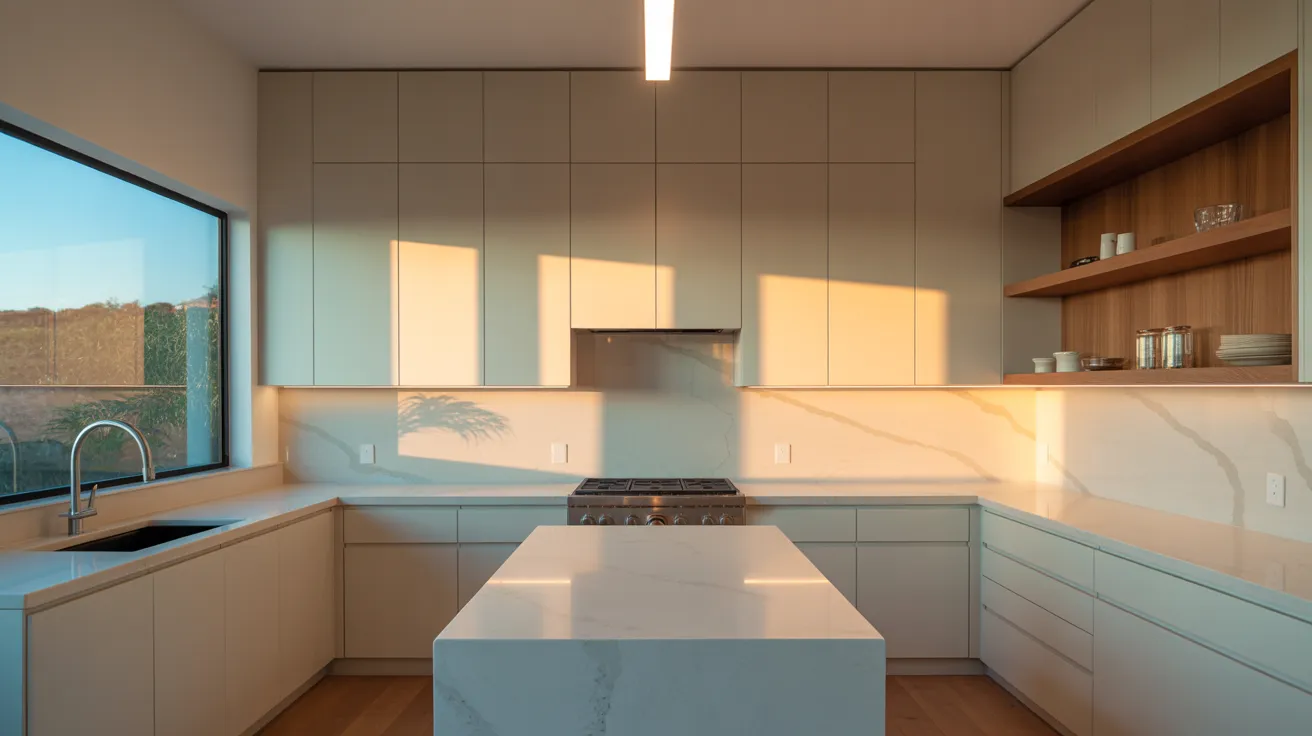
Although budgets and schedules are important, your kitchen's aesthetic sets the atmosphere you'll live with daily-from clean, slab-front modern to inviting, intermediate comfort. Begin with determining how you create dishes, gather, and clean, then align surfaces and tones to complement that flow. For a sophisticated modern appearance, choose flat-panel cabinetry, flush pulls, and clean-lined appliances, matching quartz or porcelain with minimalist accents and dark matte elements.
Interested in warm transitional decor? Mix Shaker fronts, gentle profiles, and coordinated tones-including brushed brass, mid-warm woods, and dimensional lighting. Choose durable counters with understated veining, include a furniture-style island, and blend textures without overwhelming the space. Design clever and discreet storage, allow hardware complement fixtures, and unite the room with a harmonious palette that stays current yet timeless.
Frequently Asked Questions
What Methods Do You Use to Vet Subcontractors and Perform Background Checks?
You vet subcontractors through validating certifications, performing background checks, and establishing clear standards. Initially, you conduct qualification checks through state boards, followed by testimonial verification with past customers and vendors. After reviewing insurance and workers' compensation documentation, you verify trade certifications and evaluate capabilities through small trial projects. You mandate written scopes, safety compliance, and lien waivers. Moreover, you supervise on-site performance, record problems, and dismiss workers who fail to meet expectations.
What Post-Remodel Support and Warranties Are Available?
We provide a comprehensive one-year workmanship warranty, along with manufacturer-backed product coverage that we register for you. We also have available extended guarantee options for additional peace of mind. After completion, we provide completion support, prompt service calls, and included 30-day and 6-month check-ins. Interested in ongoing care? Choose our Maintenance plans for scheduled inspections, caulk and grout refreshes, hardware adjustments, and appliance fit checks. You'll always have a single point of contact for all your service needs.
What Steps Are Taken to Protect Your Home During Demolition and Control Dust
Your protection begins from day one: we establish protected work areas with barrier systems, maintain HEPA filtration, and install floor protection. Because dust can migrate up to 50 feet in open spaces, we create negative air pressure and implement zip-wall entries to capture particles. We protect vents, carefully bag debris before removal, and perform daily cleaning with HEPA vacuums and damp wipes. We also provide doorway seals and path runners to preserve living areas clean and protected.
Are Green Building and Non-Toxic Construction Methods Available?
Indeed, you can opt for eco-friendly, non-toxic building approaches throughout your project. You'll receive low VOC finishes for your finishing materials, plus recycled cabinetry options or FSC-certified wood. You'll opt for energy-saving appliances, LED lighting, and water-saving fixtures. We'll source locally when possible, repurpose existing materials, and ensure proper waste management. You'll receive product certifications and details, and we'll work alongside green specialists if needed to meet your sustainability targets and budget.
What's Your Process for Managing Change Orders and Unexpected Findings?
We handle change orders and unexpected discoveries through a structured, documented process. Initially, we pause work to assess impact and present options with detailed pricing and timeline effects. All scope adjustments are approved in writing ahead of implementation. We utilize contingency budgeting to handle surprises, limiting delays. Information is shared quickly, schedules are revised, and expenses are monitored transparently. Moreover, we confirm code compliance, document conditions, and preserve a paper trail to support sound choices and keep projects on track.
Wrapping Up
You're ready to convert your kitchen into a space that works as beautifully as it looks. By selecting trusted Los Angeles remodelers, you'll streamline permits, optimize layouts, and pick quality, trendsetting materials without complications. Keep bids transparent, timelines clear, and coordination smooth across professionals and craftsmen. Aim for a style that suits your life, from contemporary minimalist to welcoming transitional. Here's an important factor: kitchen remodels typically recover between 60-80% of costs at resale, boosting property worth and everyday pleasure.